


The Ultimate Guide to Selective Pallet Racking
An interactive tool to explore the most versatile warehouse storage solution.
What is Selective Pallet Racking?
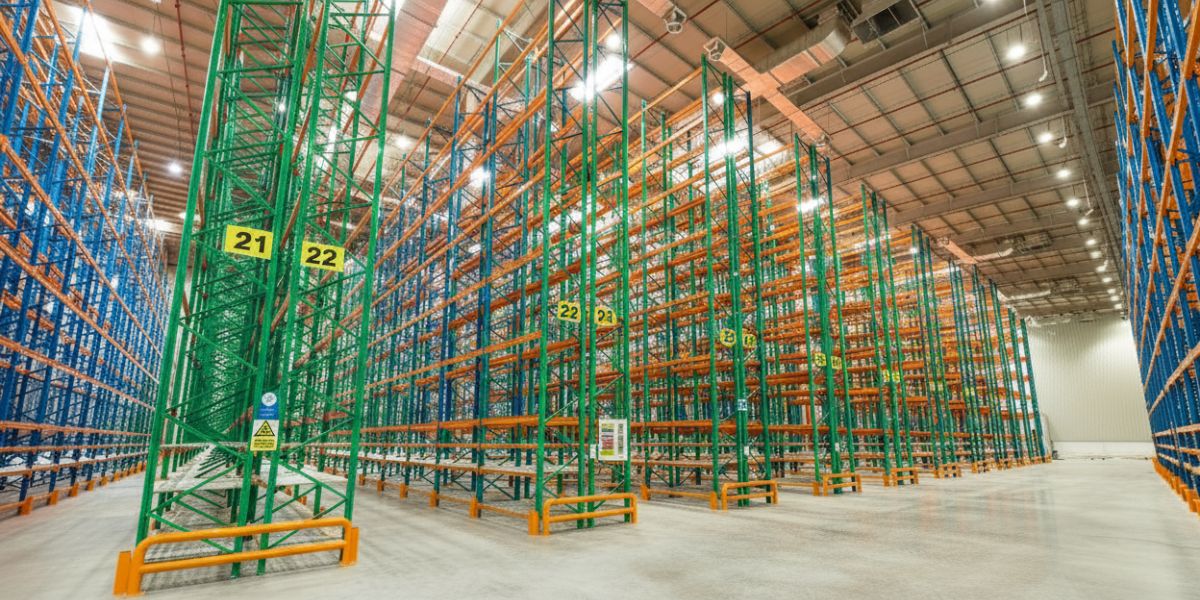
Selective pallet racking is the most popular storage system because it provides **direct, "selective" access** to every single pallet in your inventory. It consists of vertical upright frames connected by horizontal beams, creating a multi-level structure. This simple yet effective system is the foundation of efficient warehouse logistics, offering a perfect balance of versatility, accessibility, and cost-effectiveness.
Unbeatable Advantages
100% Selectivity
Allows for immediate, direct access to every pallet, which is critical for operations with high SKU counts and fast-moving inventory.
Cost-Effective
Features a lower upfront cost per pallet position and requires less specialized maintenance compared to high-density systems.
Versatility
Accommodates a vast range of pallet sizes and weights. Its modular design allows for easy reconfiguration and expansion.
Standard Equipment
Works seamlessly with standard forklifts, eliminating the need for expensive, specialized equipment and additional operator training.
Supports FIFO
The direct access makes it the ideal system for First-In, First-Out inventory management, crucial for perishable goods.
Simple Installation
The straightforward design makes installation quick and easy, with minimal day-to-day maintenance required.
Who Should Use It?
This system is the go-to solution for a wide range of industries that prioritize accessibility and flexibility over sheer storage density. Its adaptability makes it ideal for dynamic operational needs.
Anatomy of a Racking System
Understanding the core components of a selective pallet rack helps in appreciating its simplicity and strength. Interact with the labels below to highlight each part of the system and learn about its function.
- Upright Frames
- Horizontal Beams
- Wire Decking
- Accessories
Upright Frames
The vertical backbones of the system. These are a series of upright columns and bracing that provide structural support and are anchored to the floor.
Selective vs. High-Density Racking
How does selective racking stack up against high-density alternatives like Push-Back or Drive-In systems? Use the chart below to visually compare the key trade-offs in cost, space utilization, and accessibility.
Selective vs. Push-Back
Inventory Type
High SKU count vs. Low SKU count
Equipment
Standard Forklift vs. Standard Forklift
Inventory Method
Perfect for FIFO vs. LIFO only
Frequently Asked Questions
Here are answers to some common questions about selective pallet racking to help you make an informed decision.
What is the difference between selective and push-back racking? ▾
Selective racking provides 100% direct access to every pallet (FIFO friendly). Push-back is a high-density LIFO (Last-In, First-Out) system where pallets are stored on carts that push previous pallets back. You can only access the front-most pallet in a lane.
How much does selective racking cost per pallet position? ▾
Selective racking is the most cost-effective option, typically having the lowest initial cost per pallet position. Prices vary based on capacity, height, and steel prices, but it's significantly cheaper than high-density or automated systems.
Is selective racking safe? ▾
Yes, when properly installed, maintained, and used within its load capacity limits, it is very safe. Regular inspections for damage and using accessories like column protectors and safety clips are essential for maintaining a safe system.
Can I use wire decking with selective pallet racking? ▾
Absolutely. Wire decking is a highly recommended accessory. It provides a stable surface for pallets, prevents items from falling, increases safety, and is often required to meet local fire safety codes by allowing water from sprinklers to pass through.